Turkey Expands Its Energy Exploration Beyond Its Borders with Planned Deep-Sea Drilling off the Somali Coast

Turkey is taking a new step beyond its borders in the field of energy exploration, as it prepares to dispatch the advanced drilling vessel Cagri Bey to the Somali coast in February, marking its first-ever deep offshore drilling operation in international waters.
This move is based on a cooperation agreement signed in 2024 between Turkey’s national oil company and the Somali Petroleum Authority, reflecting a shift in the Ankara–Mogadishu partnership from political and security support toward direct investment in the energy sector.

Between ambitions to secure energy resources and reduce import costs, and calculations related to geopolitical influence in the Horn of Africa, this move raises broader questions about its strategic dimensions, security challenges, and potential gains for both sides, as well as its regional and international implications.
Background of the Partnership
The Turkish–Somali partnership in the energy sector did not emerge in isolation, but rather as part of a long trajectory of political and economic rapprochement that has deepened over the past decade.
Alongside Turkey’s humanitarian and development presence, and the opening of its largest embassy in Mogadishu, the establishment of a Turkish military base in 2017 to train Somali forces marked a pivotal moment in supporting state institutions and strengthening security.
From the perspective of Turkish decision-makers, Somalia occupies an advanced position within Ankara’s “Opening to Africa” strategy, given its highly strategic location on the Indian Ocean and its vast, yet largely untapped, natural resources.
Within this framework, the signing of the 2024 oil and gas cooperation agreement between Turkey’s state-owned oil company and the Somali authority laid the foundation for a new phase of partnership—one that goes beyond political and security support toward direct, long-term investment in the energy sector, including onshore and offshore exploration activities.
Turkish President Recep Tayyip Erdoğan had indicated as early as 2020 Ankara’s readiness to engage in energy projects in Somalia, following an official invitation from the Somali government to explore for oil in its territorial waters.
These signals soon translated into action, as Turkey—through the seismic research vessel Oruç Reis—conducted extensive geological surveys in Somali waters. The surveys covered three offshore zones with a total area exceeding 4,000 square kilometers, including more than 4,400 square kilometers subjected to 3D seismic scanning in the Indian Ocean off the Somali coast.
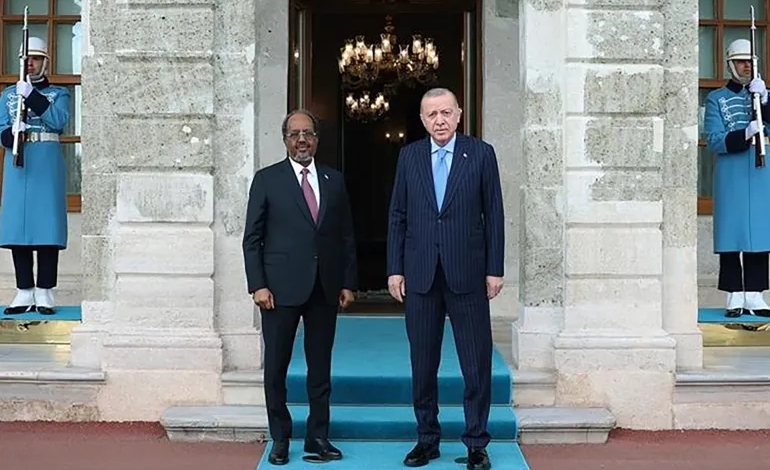
At a joint press conference held in Istanbul in late December, the Turkish and Somali presidents officially announced the completion of the necessary studies and the transition to the offshore drilling phase during 2026.
Geopolitical Dimensions
Turkey’s move in Somalia is not limited to energy and economic considerations; it also carries significant geopolitical stakes in one of the world’s most sensitive regions. Strengthening Turkey’s presence in Somalia’s energy sector gives Ankara a strategic foothold near vital maritime routes—from the Gulf of Aden to the Indian Ocean and along the Bab al-Mandeb Strait—at a time of intensifying regional and international competition for influence in the Horn of Africa.
For Somalia, the partnership with Turkey falls within a policy of diversifying allies and attracting investments to support reconstruction, building on Turkey’s long-standing record of humanitarian and military assistance.
However, this trajectory has raised regional sensitivities, particularly in Ethiopia, which has closely monitored the growing Turkish role amid concerns over arrangements that could affect its maritime interests. Ankara sought to contain these concerns through mediation that led, in late 2024, to an understanding between Addis Ababa and Mogadishu granting Ethiopia access to a commercial port.
In this context, political analyst Turgut Özman argues that the timing of Turkey’s announcement to begin energy exploration off the Somali coast cannot be separated from the broader regional context. He believes its coincidence with Israel’s recognition of Somaliland carries political implications that go beyond technical and economic considerations.
Economic and Strategic Presence
Özman told Al Jazeera Net that Ankara aimed through this step to affirm a clear political stance in support of Somalia’s unity at a moment when that unity is facing a direct test. He explained that Turkey views the Israeli move as part of a broader process to reshape the political geography of the Horn of Africa by entrenching de facto entities.
He added that the timing also carries a message of soft political deterrence, signaling that Turkey is not content with diplomatic positions alone, but is moving to establish a long-term economic and strategic presence within internationally recognized Somalia. In his view, energy exploration helps redraw lines of legitimacy in the face of attempts to grant international recognition to separatist entities.
Özman further sees the Turkish move as part of a calculated recalibration of power balances in the Horn of Africa amid escalating regional and international competition. He notes that Ankara has chosen to expand its influence through economic and energy tools rather than direct confrontation, thereby strengthening its position in the Red Sea and Gulf of Aden equation.
Potential Gains
Economic analyst Othman Ibek believes the offshore exploration project represents a long-term strategic bet for both Turkey and Somalia, given its economic and political potential despite the surrounding risks and challenges.
He explains that any commercial discovery of oil or gas off the Somali coast would constitute a significant gain for Ankara in terms of energy security, by securing stable supplies from a partner country, reducing import costs, and enhancing the diversification of supply sources.
Ibek added that the success of the project could cement Turkey’s position as a cross-border energy player and give its national oil company a prominent role in international exploration projects, thereby enhancing Ankara’s geopolitical weight in Africa and the broader region.
On the other hand, Somalia is placing great hopes on the oil and gas sector as a gateway to economic recovery and the attraction of high-quality investments in energy and infrastructure.
However, Ibek cautions that these ambitions face fundamental challenges, foremost among them geological risks, the high cost of deep-water drilling, and the lack of infrastructure needed to translate any potential discoveries into actual production.