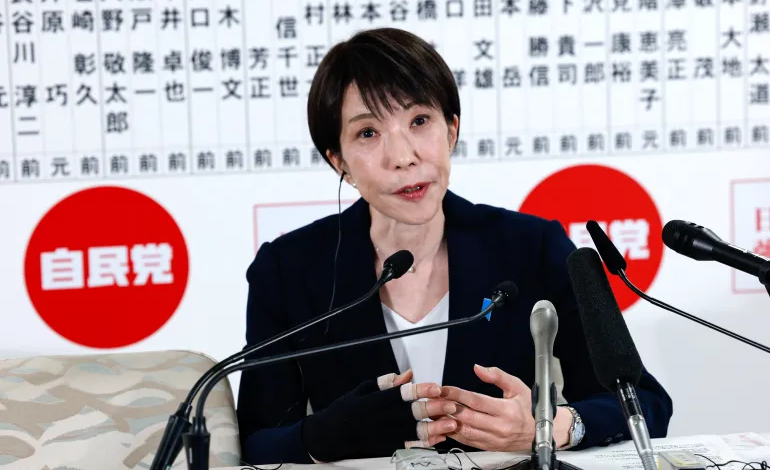
Japanese Prime Minister Sanae Takaichi is pushing forward with an ambitious plan to reshape the country’s economy, following 110 days of reform-driven leadership and a decisive win in Sunday’s general election.
According to Reuters, the ruling coalition led by Takaichi achieved a landslide victory. Less than two hours after polls closed, the Liberal Democratic Party (LDP), which she heads, had already surpassed the 233-seat threshold required for a majority in the 465-member lower house.


In a report from Tokyo, The New York Times described the snap election called by Takaichi as a “referendum” on whether voters support her economic reform plans. Notably, Takaichi is Japan’s first female prime minister and has often cited former British leader Margaret Thatcher—the “Iron Lady”—as a political inspiration.
Expanding Public Spending
Takaichi has proposed a significant increase in public spending aimed at stimulating economic growth, though critics warn this could further expand Japan’s already massive public debt. Last year, she passed a record supplementary budget in an effort to break what The New York Times called Japan’s “long-standing deflationary cycle.”
Her administration has also moved swiftly to expand military spending in response to China’s growing regional influence, while promoting state-led investments in artificial intelligence and semiconductor manufacturing.
However, the central question remains how these large-scale expenditures will affect Japan’s fiscal balance—especially as Takaichi has pledged to accelerate discussions on suspending the 8% consumption tax on food products for two years without issuing new debt to finance the measure.
In a televised interview cited by Reuters, Takaichi said the LDP intends to proceed with its campaign pledge to suspend the food sales tax but acknowledged that details would require discussions with other parties. “It is essential to accelerate discussions” on freezing the consumption tax rate, she stated.
Market Concerns and Fiscal Pressure
Financial markets have reacted cautiously. Plans to suspend the food sales tax have driven Japanese government bond yields to record highs amid investor concerns about how Tokyo would fund the policy.
The The Guardian reported that freezing the sales tax could reduce government revenues by approximately $30 billion (around ¥5 trillion), while the broader economic stimulus package could cost as much as $135 billion.
Japan’s public debt—roughly double its gross domestic product—remains the highest among advanced economies. According to the World Bank, Japan’s GDP stood at about $4 trillion in 2024, while economic growth was a modest 0.1%, underscoring the urgency behind Takaichi’s stimulus push.
Takaichi recently secured the backing of U.S. President Donald Trump for her economic reform agenda. Meanwhile, the election drew close attention from China, particularly after Takaichi sparked the most significant diplomatic friction with Beijing in more than a decade by publicly outlining how Tokyo would respond to a potential Chinese attack on Taiwan.