Africa’s Path in the Post-Liberal World: How Nigeria and South Africa Can Lead the Continent Forward

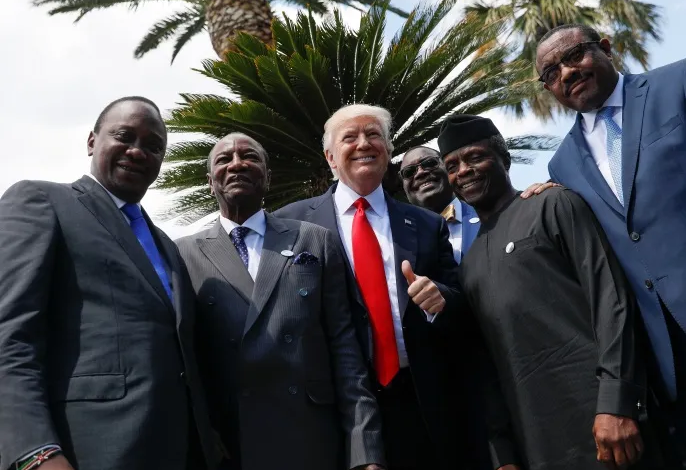
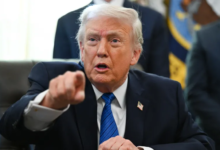
Amaka Anku, Head of Africa Practice at the Eurasia Group, analyzes in her Foreign Affairs article how U.S. President Donald Trump’s “coercive policies” are reshaping Africa’s geopolitical landscape. She argues that despite the risks, African nations have a real opportunity to thrive in a post-liberal international order—if they accelerate economic integration, build larger markets, and push industrialization. Nigeria and South Africa, she contends, are uniquely positioned to lead this effort, not only because they are the largest economies in sub-Saharan Africa but also due to their shared history of advancing African interests.
As the post-1945 liberal order is dismantled, some analysts believe that states on the periphery stand to benefit from a system less preoccupied with democracy and governance. Yet Trump’s transactional, pressure-based world poses serious challenges for countries with limited geopolitical leverage. Africa accounts for about 20% of the world’s population but only 5% of global economic activity. Stronger regional cohesion, Anku explains, would give African states much greater bargaining power with global partners.
Africa’s history proves that cooperation is possible. Following independence movements from the 1950s to the 1970s, African nations coordinated politically and financially to support liberation struggles. In 1963, 32 newly independent states created the Organization of African Unity, the continent’s first major multilateral institution, which became an important tool for shaping international consensus on African independence. Today, Anku believes the same cooperative spirit must be revived—but anchored in shared economic interests rather than moral imperatives.
Nigeria and South Africa are well placed to lead this new agenda. Nigeria, Africa’s most populous nation, wields significant cultural influence through Afrobeats music, Nollywood films, and global fashion trends. South Africa, home to the continent’s most advanced industrial economy, holds greater geopolitical weight thanks to its strong financial markets and membership in the G20 and the BRICS bloc. Though domestic pressures in both countries have weakened their continental roles in recent years, the disruptive effects of Trump-era policies may rekindle the need for strong African leadership.
Both nations have already begun exploring deeper collaboration. In response to U.S. tariffs, South African and Nigerian officials have met to boost cooperation in sectors such as mining and manufacturing. South Africa aims to diversify its trade partnerships to offset tariff losses, while Nigeria seeks to shift from exporting raw materials to exporting higher-value goods across Africa.
Current leadership in both countries shows renewed ambition. Under President Bola Ahmed Tinubu, Nigeria is pursuing greater global influence, seeking G20 and BRICS membership, and expanding ties with emerging powers such as Brazil and India. South African President Cyril Ramaphosa continues to champion continental priorities, including securing a permanent African Union seat in the G20 and increasing funding for African scientists. Combined, the two nations could mobilize Africa behind common positions on climate policy, trade rules, and regional security—strengthening the continent’s geopolitical clout.
Nigeria and South Africa together account for roughly one-third of Africa’s economic activity and host many of its largest corporations. South African telecommunications and retail companies dominate markets across the continent, while Nigerian banks and digital-payment firms operate widely in West and Central Africa. Deeper integration would allow these firms to scale up production, reduce costs, and expand consumer access. It would also boost industries such as automotive manufacturing, pharmaceuticals, and steel—bringing much-needed foreign investment.
Economic cooperation is essential for domestic stability as well. Nigeria, projected to become the world’s third most populous country by 2050, must create millions of jobs to avoid a demographic crisis. Meanwhile, South Africa’s slow economic transformation continues to frustrate citizens, especially the Black majority still facing significant structural inequalities. Without growth, both nations risk deeper social fractures and the rise of political extremism.
A crucial step toward integration is advancing the African Continental Free Trade Area (AfCFTA), which includes 54 countries and aims to eliminate tariffs on 90% of intra-African goods, creating a unified $3.4 trillion market. Implementation has been slow due to low productivity and weak infrastructure. Coordinated efforts by Nigeria and South Africa to harmonize regulations and develop integrated industrial strategies could unlock the agreement’s full potential.
Initial bilateral progress should eventually expand to include other influential African states such as Egypt, Morocco, and Algeria, helping build a continent-wide coalition for economic transformation. In a geopolitical environment increasingly shaped by coercion and zero-sum bargaining, competition between Nigeria and South Africa would be self-defeating. Their shared leadership is not a matter of goodwill—it is the most effective way to safeguard national and continental interests.
Together, they can guide Africa into a new era of economic strength and political relevance on the global stage.