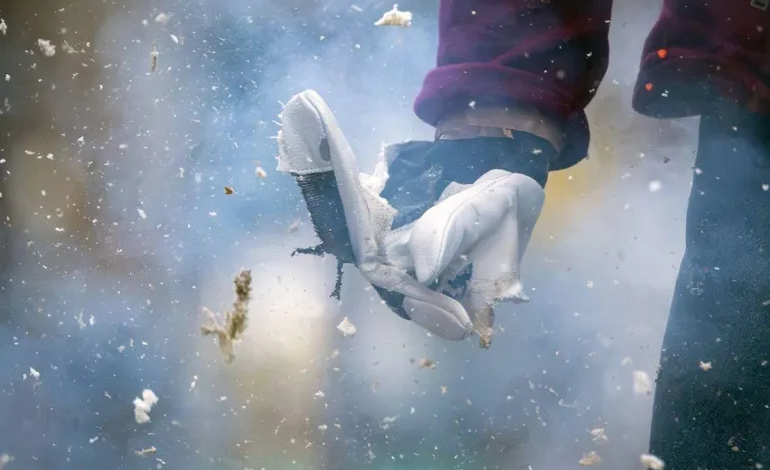
Fireworks and firecrackers can cause serious burns and severe injuries to the hands, fingers, or eyes as a result of negligence or manufacturing defects. Medical experts outline essential first aid steps that should be taken immediately in such cases.
Burns
Professor Bernd Böttiger, a physician with the German Red Cross, explains that first aid for burns begins with cooling the affected area under running water for at least 20 minutes. The water should not be extremely cold, as this may lead to a dangerous drop in body temperature.
After cooling, the burn should be loosely covered with a sterile dressing, such as a clean bandage. Minor burns may not require immediate hospital treatment, but large burns, as well as burns affecting children and infants, require urgent medical attention and prompt transfer to a hospital.


Hand and Finger Injuries
If a hand injury is accompanied by heavy bleeding, emergency services should be contacted immediately. It is crucial to prevent excessive blood loss by applying direct pressure to the wound using a sterile cloth or bandage from a first aid kit, while keeping the injured hand elevated.
If bleeding continues, a pressure bandage should be applied, securing it by wrapping gauze around the wound two or three times.
In cases where an explosion results in the amputation of a finger or part of it, the injured person must be taken to the hospital without delay. Alongside stopping the bleeding, first responders should carefully preserve the amputated part to improve the chances of reattachment by wrapping it in a sterile cloth if possible. If no bandage is available, a clean fabric handkerchief may be used, while paper tissues should be avoided to prevent fibers from sticking to the tissue.
The amputated part should then be placed in a sealed plastic bag, which is placed inside another plastic bag containing cold water and ice, if available, to keep it cool without direct contact with water.
Eye Injuries
Whether the injury involves a corneal scratch or a foreign object lodged in the eye, immediate transport to a hospital is essential. Both eyes should be covered to keep them still and reduce strain until medical care is provided.
Preventive Measures
To prevent such accidents, the German Society for Orthopaedics and Trauma Surgery emphasizes the importance of safe handling of fireworks and firecrackers by carefully reading and strictly following all instructions.
Only certified fireworks should be used, identifiable by the CE marking on their packaging. Homemade, modified, or uncertified fireworks must be strictly avoided, as they may explode prematurely or with excessive force.
Additionally, fireworks should never be carried directly on the body, such as in jacket or trouser pockets, since accidental ignition could cause them to explode against the body. It is also strongly advised not to relight fireworks that fail to ignite on the first attempt.