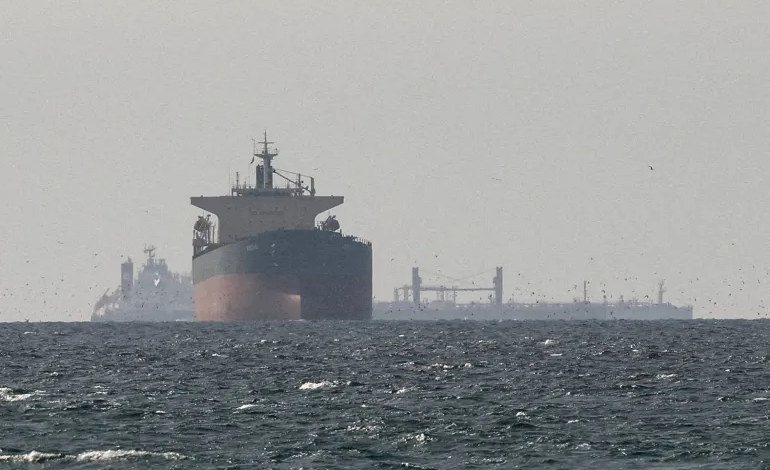
CNN reported that hundreds of vessels remain stranded in the Strait of Hormuz despite a two-week ceasefire agreement between the United States and Iran.
Meanwhile, the Iranian Students’ News Agency stated on Thursday that the Iranian Revolutionary Guard Navy released a map showing alternative shipping routes through the strait to help vessels avoid naval mines.

The Financial Times reported that Iran has halted the passage of oil tankers through the strait in response to Israeli strikes targeting Lebanon.
According to data from MarineTraffic, 426 oil tankers, 34 liquefied petroleum gas carriers, and 19 liquefied natural gas vessels remain trapped in the area.
The Wall Street Journal added that Iranian authorities allowed only four ships to pass through the strait on Wednesday—the lowest number recorded in April—requiring prepayment of transit fees in cryptocurrencies or yuan.
European Assistance Sought
Bloomberg cited a senior NATO official saying the U.S. has requested concrete plans from its European allies to ensure safe navigation through the Strait of Hormuz within days.
The official added that Washington seeks specific commitments from European partners regarding their support in securing the strait.
CNN noted that the shipping industry is seeking more clarity on how vessels can safely transit the critical waterway during the U.S.-Iran ceasefire.
Tim Huxley told CNN, “It’s too early to tell. Some ships will certainly leave the area now, but tensions remain.”
Strategic Importance of the Strait
The Strait of Hormuz is a vital artery for global energy, carrying roughly 20% of the world’s oil supply. CNN highlighted that insurance costs for shipping in the region remain high, as underwriters view the ceasefire as positive overall but note risks such as uncertainty over which Iranian authorities approve passage and which ships transit first within a narrow time window.
Simon Kaye said, “This situation requires monitoring and patience. There cannot be a rush to exit; every vessel needs special clearance. Will Gulf ships, American vessels, or others with back-channel contacts to Tehran be prioritized?”
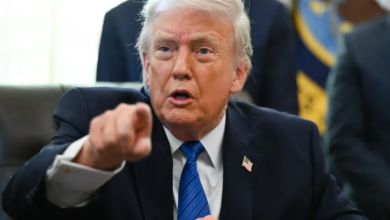
U.S. President Donald Trump announced early Wednesday a two-week halt on strikes against Iran, contingent on the full and immediate reopening of the Strait of Hormuz and a bilateral ceasefire.
Given that the strait handles about 20% of global oil shipments, any proposals to impose fees or restrict navigation remain highly controversial among bordering nations and the international community.