Recent medical studies and clinical trials have revealed the development of an injectable foam that could mark a major breakthrough in the treatment of severe internal bleeding—one of the leading causes of death in trauma and serious injury cases.
US-based company RevMedx, which specializes in hemorrhage control technologies, announced the development of its new product ResQFoam, designed specifically to treat acute internal bleeding in the abdominal cavity. The company reported successful use of the product in an early clinical study.


The technology works by injecting a medical foam into the abdominal cavity, where it rapidly expands to fill the space and apply pressure on bleeding tissues. This helps slow or temporarily stop bleeding until surgical intervention can be performed.
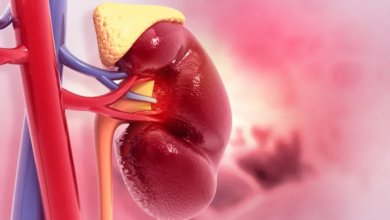
Internal bleeding, particularly in the abdomen, is considered one of the most dangerous medical emergencies, as many patients can die even after reaching the hospital due to rapid blood loss.
The foam operates through multiple mechanisms, including applying internal pressure to the bleeding source, promoting vasoconstriction, and accelerating blood clotting, all of which contribute to significantly reducing blood loss.
According to a report by Business Wire, the foam is injected into the abdominal cavity, where it quickly expands to generate internal pressure, giving medical teams critical time to stabilize patients and perform life-saving surgery.
Recent experiments have also shown that some of these foams can self-expand, adapt to the shape of damaged tissues, and even adhere to them, making them effective in complex cases where the exact source of bleeding is difficult to identify.
In early clinical trials, the technology helped stabilize critically injured patients following severe accidents by buying valuable time before surgery—significantly improving their chances of survival.
Despite these promising results, the technology is still in the clinical trial phase and has not yet received widespread approval. Doctors caution about potential risks, including infections and side effects, emphasizing the need for further research before broader implementation.
Experts believe this innovation could represent a major advancement in emergency medicine, particularly in war zones and large-scale accidents, where time is a decisive factor between life and death.
In this context, lead researcher Preston Hoagland noted that the foam helped stabilize a critically injured patient following a car accident, with improvements observed in blood pressure and heart rate before the patient was eventually discharged after recovery.
Abdominal internal bleeding remains one of the most life-threatening conditions, as blood loss occurs internally due to injury or disease, making rapid intervention essential for survival.