Prime Minister: Parliamentary Dialogue Is a Pillar of Democracy and the Government Is Open to Constructive Criticism

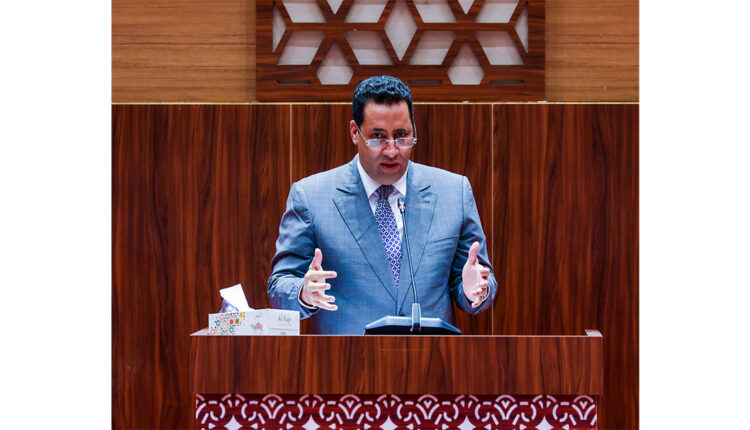
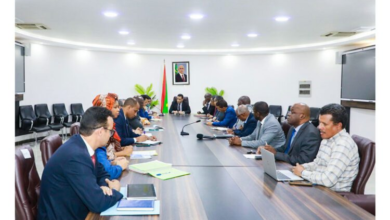
At the opening of the plenary session dedicated to discussing the outcomes and future prospects of government action for 2025–2026, the Prime Minister expressed his appreciation to the Speaker of the National Assembly and to Members of Parliament for the ideas they put forward, as well as for their commendation and positive remarks. At the same time, he voiced his satisfaction with the criticism raised during the session, stressing that it stemmed from sincere intentions and reaffirming his respect for the views represented and his confidence in the goodwill of those who expressed them.
In his response to questions and interventions from MPs during the session held on Saturday under the chairmanship of National Assembly Speaker Mohamed Bamba Makt, and attended by members of the government, the Prime Minister noted that differences of opinion on certain issues may sometimes result from a lack of accurate information or from reliance on incomplete or imprecise data. He expressed hope that the session would help clarify a number of files objectively, enabling all parties to gain a clearer understanding of the issues raised.
He affirmed that all interventions would be taken into consideration, noting that the remarks made by 117 MPs had been recorded by the relevant ministerial departments, each within its respective area of responsibility.
The Prime Minister explained that it was not possible to provide immediate and direct responses to all the issues raised, but emphasized that they would be addressed through the presentation of the main pillars of the program of President Mohamed Ould Cheikh El Ghazouani. He stressed that every concern raised would be dealt with within the framework of this comprehensive program.
He further underlined that the atmosphere of the debate would remain purposeful and objective, with the primary goal being the pursuit of the public interest. He highlighted the importance of this meeting, which brought together all segments of the political spectrum in a spirit of seriousness, sincerity, and national commitment.
The Prime Minister described such sessions as a key measure of a democratic system, noting that one of the most significant contributions of President Ghazouani to the country’s political practice has been moving beyond polarization and rigid political divides that prevailed for years. This, he said, has helped entrench the conviction that an opposition figure is not an enemy, but rather a holder of a viewpoint worthy of respect.
He acknowledged that the government can both succeed and fall short, stressing that recognizing the problems faced by citizens is not a sign of weakness but a source of strength. He added that conditions are not ideal, but neither are they as bleak as some portray them, warning that excessive pessimism does not help resolve challenges and may instead hinder solutions.
The Prime Minister explained that this approach reflects the methodology adopted by the President and forms the framework within which the government operates. It also underpins the government’s general policy statement, with a focus on long-term strategic solutions, given that development challenges cannot be resolved overnight.
He concluded by emphasizing that politicians have a central role in thinking responsibly and adopting positions that contribute to practical and implementable solutions. He stressed the need to assume responsibility for citizens’ interests regardless of political orientations, noting that this requires sacrifice and accountability—drawing a parallel with the role of a judge who rules based on established facts rather than personal opinions.