The German health website “Aponet.de” reports that sinusitis usually develops after a common cold, when the mucous membranes lining the sinuses become inflamed.
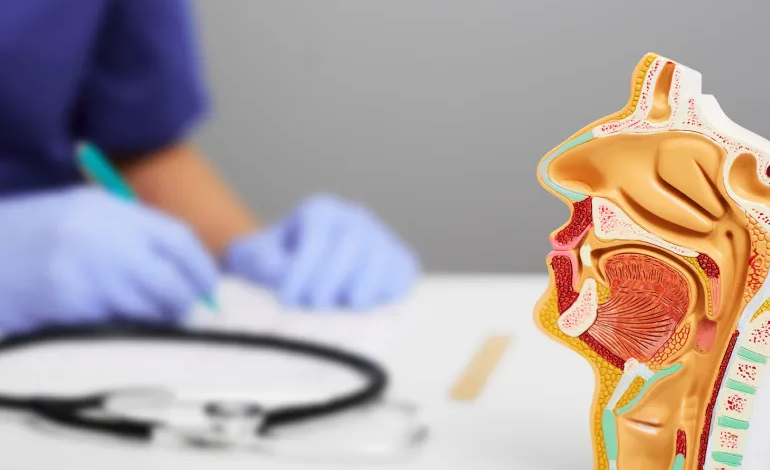
The site, which serves as the official portal of German pharmacists, explains that the face contains several air-filled cavities. These include the maxillary sinuses, frontal sinuses, ethmoid sinuses, and sphenoid sinuses.


These sinuses are connected to the nasal cavity through narrow passages and are lined with mucous membranes. When these membranes swell due to inflammation, normal drainage of secretions becomes impaired. As a result, mucus accumulates in the sinuses, causing the characteristic pressure-like pain, which often worsens when bending forward.
Nasal Congestion
Common symptoms of sinusitis include thickened nasal mucus, nasal congestion, and mild facial pain, particularly in the cheek area.
According to “Aponet.de,” inhaling hot steam is a simple home remedy, as it helps moisturize the mucous membranes and relieve pressure.
Decongestant Medications
Sinusitis can be treated with nasal sprays or oral medications that reduce congestion. These help drain mucus and improve breathing. However, such medications should only be used for a few days, and doctors recommend preservative-free nasal sprays.
Pain relievers such as ibuprofen, acetylsalicylic acid (aspirin), diclofenac, and paracetamol (acetaminophen) can reliably alleviate acute symptoms, provided they are not taken for extended periods.
If sinus infections recur more than four times a year, doctors refer to the condition as recurrent sinusitis. In such cases, cortisone nasal sprays are used to reduce inflammation, which also applies when allergies are the underlying cause.
Surgery
If symptoms persist, surgery may be beneficial. In this procedure, the doctor widens the narrow passages between the sinuses and the nasal cavity to reduce mucus buildup.
Chronic sinusitis is treated in a similar manner to recurrent sinusitis, with cortisone nasal sprays also being used. Nasal rinsing with saline solutions can significantly ease symptoms as well. In certain cases, antibiotics may be tried, and if all other treatments fail, surgery remains the last resort.