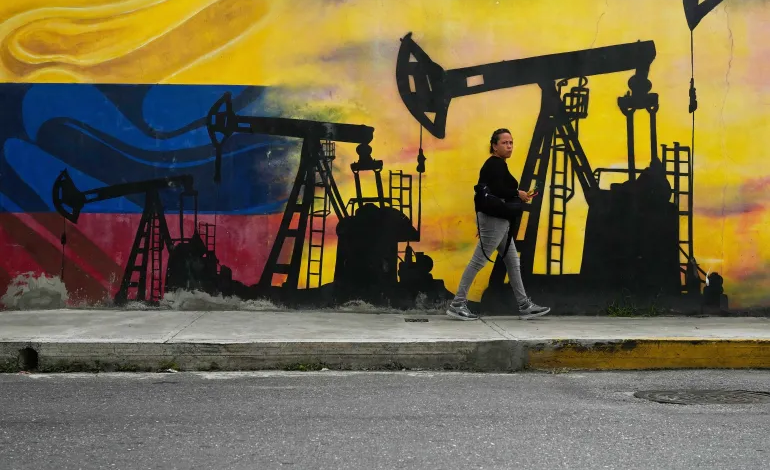
At the heart of an escalating debate within the U.S. energy industry, President Donald Trump’s plan to aggressively engage in Venezuela’s oil sector has triggered unprecedented anger among leading American shale producers. Industry leaders warn that flooding the market with Venezuelan crude could undermine domestic production and contradict the core of the “America First” slogan, according to a report by the Financial Times.
Tensions Within Trump’s Oil Camp

The report notes that executives at independent drilling companies have cautioned that Trump’s push to lower oil prices by opening the door to Venezuelan supply puts U.S. production “at risk.” One senior shale executive told the newspaper that the move is “against American producers,” adding that any U.S. government guarantees for companies operating in Venezuela would represent “a direct blow” to the domestic industry.
Anger is particularly pronounced in Texas, where many shale oil leaders were among the strongest financial backers of Trump’s return to the White House. These producers believe the administration is effectively favoring foreign oil production over local independent companies. Kirk Edwards, CEO of Latigo Petroleum, said the message from Washington appears to be that it would rather “spend American money to revive Venezuelan oil than support existing U.S. producers.”
Worrying Signals for U.S. Production
These concerns are reinforced by official data. The U.S. Energy Information Administration has forecast a decline of about 100,000 barrels per day in U.S. oil production in 2026, marking the first annual drop since the COVID-19 pandemic. The number of active drilling rigs has fallen to just 412, down 15% from last year. The report stresses that U.S. shale oil depends on continuous drilling to sustain growth, making low prices an existential threat to the sector.
Shale producers typically need West Texas Intermediate crude prices above $60 per barrel to remain profitable. However, prices fell below $56 this week, with expectations of an average of $51 this year. This comes as OPEC countries, led by Saudi Arabia, continue to increase output, intensifying fears of oversupply and further downward pressure on prices.
Big Oil Gains, Smaller Players Lose
The Financial Times notes that opportunities in Venezuela are largely limited to energy giants such as ExxonMobil, Chevron, and ConocoPhillips, given their ability to absorb political risk and mobilize large-scale capital. Smaller producers fear that any revival of Venezuelan oil production would worsen the supply glut and erode their market share.
Shares of independent shale companies suffered sharp losses this week, with Diamondback Energy, APA Corp, and Devon Energy posting declines of up to 9%, as investors bet that increased Venezuelan oil flows would weigh on future profits.
Political Calculations Ahead of Elections
The report links Trump’s oil strategy to electoral considerations, suggesting he aims to keep crude prices near $50 per barrel and gasoline prices below $2 per gallon ahead of the midterm elections. In this context, U.S. Energy Secretary Chris Wright said that allowing major American companies to operate in Venezuela could boost its oil output by up to 50% within a year, leading to “further downward pressure on gasoline prices.”
The Financial Times concludes that Trump’s Venezuela strategy exposes a striking paradox: while it may strengthen America’s global influence in energy markets by securing control over external resources, it simultaneously weakens a key pillar of domestic strength—the independent shale oil sector—opening a new chapter in the clash between politics and energy in the United States.