The United States and Iran held a round of talks in Oman last week, allowing Tehran to assess Washington’s seriousness and showing enough alignment to continue diplomacy, according to Iran’s Foreign Ministry.
Amid rising military tensions in the region, both sides have exchanged threats and outlined negotiating conditions. Iranian outlet نور نيوز quoted Ali Shamkhani, adviser to Supreme Leader Ali Khamenei, as saying that Iran’s missile capabilities are a red line and non-negotiable. Meanwhile, US President Donald Trump told Fox Business that Iran “wants to make a deal and would be foolish not to.”

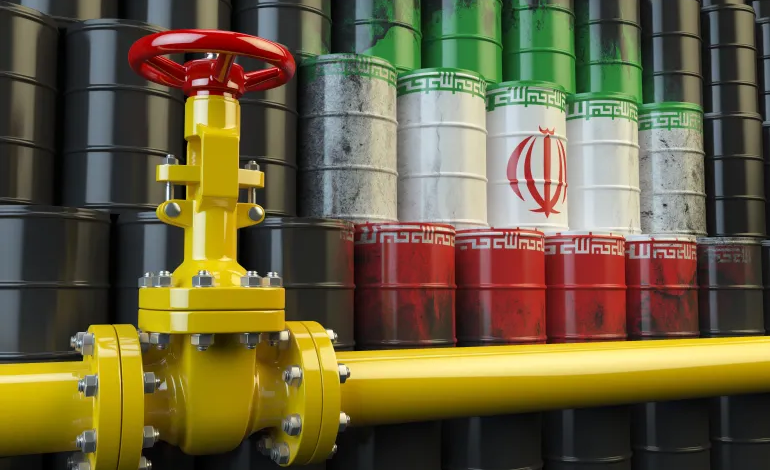
According to The Wall Street Journal, US officials have discussed seizing tankers carrying Iranian oil to increase pressure on Tehran, though concerns remain about retaliation and disruptions to global oil markets.
Washington’s key demands reportedly include Iran ending uranium enrichment, halting ballistic missile development, and ceasing support for armed groups in the region. Tehran has long denied seeking nuclear weapons.
At the same time, economic unrest in Iran has triggered protests in recent months, adding another layer of uncertainty to the broader geopolitical landscape.
With the Gulf serving as a critical energy hub, oil markets are closely watching developments. Brent crude futures recently settled up 0.87% at $69.40 per barrel, while US crude rose 1.05% to $64.63 per barrel.
Escalation Scenarios
In a scenario involving direct military strikes between the US (and potentially Israel) and Iran — especially if oil infrastructure is targeted — the Center on Global Energy Policy at Columbia University projects a sharp price shock due to disruptions in both production and transportation routes.
However, analysts note that the impact could be partially cushioned by current supply levels and relatively moderate prices.
Some bank analysts, including those at Barclays, suggest oil prices could jump from around $65 per barrel to the $80 range in the short term if US or Israeli strikes target Iran’s military or political leadership.
If Iran’s response were largely symbolic — such as targeting US bases without disrupting oil or gas production or key transit routes — the price impact could be limited to a temporary increase of $3–4 per barrel.
The “Deal” Scenario
The Columbia energy center suggests the most likely path may be Trump avoiding military action in favor of pursuing a new agreement covering Iran’s nuclear and ballistic missile programs, potentially involving inspections and removal of enriched uranium.
Iranian Export Disruptions
Without major developments, BloombergNEF forecasts Brent crude averaging $55 per barrel in 2026. If Iranian oil exports were completely halted — a scenario it considers unlikely — Brent could average $71 per barrel in Q2 2026 and potentially rise to $91 by late 2026 if disruptions persist.
Iran currently produces about 3.3 million barrels per day, making it the fifth-largest producer within the OPEC+ alliance.
BloombergNEF estimates current oil prices reflect only a modest geopolitical risk premium of about $4 per barrel.
War Risk Premium and Historical Comparison
External shocks often have strong short-term effects on oil markets. During the Russian invasion of Ukraine, BloombergNEF estimates that Brent’s implied “war premium” reached $31 per barrel immediately after February 24, 2022, peaking at $47 in Q2 2022 before gradually fading as markets adjusted.
Currently, analysts say oil prices include only a limited war premium.
The Hormuz Factor
A dramatic shift could occur if the Strait of Hormuz were closed. Around 20 million barrels per day — roughly 20% of global petroleum liquids consumption — passed through the strait in 2024.
Any disruption to this critical passage would likely send oil prices soaring.
Iraqi oil expert Nabil Al-Marsoumi suggests that even without closing Hormuz, strikes on regional oil facilities could push prices above $100 per barrel. If the strait were shut, he warns, as much as a quarter of global oil supplies and one-fifth of global gas supplies could be disrupted, potentially driving oil toward $130 per barrel.
Most Likely Outcome?
Some analysts argue the most plausible outcome is a renewed nuclear deal that could increase Iranian exports by 500,000 to 1 million barrels per day on top of current levels. That added supply could push Brent below $60 per barrel and US crude below $53.
Another possibility is a limited US strike that briefly lifts Brent to $80 before prices retreat.
Ultimately, oil market projections hinge on several variables: the success of nuclear negotiations, the scale of any military escalation, and whether critical transit routes like the Strait of Hormuz remain open.