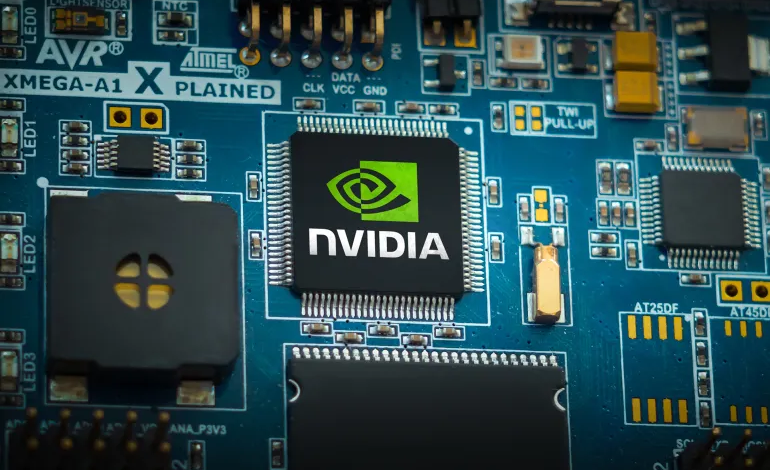
A heated debate has emerged within U.S. political circles following the U.S. Department of Commerce’s recent decision to grant approval under President Donald Trump’s administration for Nvidia to begin exporting its advanced H200 artificial intelligence chips to companies and buyers in China.
The move, announced on January 14, marks a notable shift in U.S. technology policy toward its Asian rival, despite the fact that the authorization comes with strict conditions aimed at limiting potential security risks.


Strict Export Conditions
According to a statement from the U.S. Department of Commerce, the approval is subject to several stringent requirements. These include ensuring sufficient supply of H200 chips in the U.S. market before any shipments are sent to China, conducting comprehensive testing by independent third-party laboratories, and guaranteeing that the chips are not used for military purposes.
Regulations also stipulate that exports to China must not exceed 50% of the total number of H200 chips sold within the United States, reflecting Washington’s attempt to balance commercial interests with national security concerns.
The H200 chips are considered among the most advanced AI processors currently available. They are used to train and operate high-performance artificial intelligence models and rank just below Nvidia’s most powerful chip series, whose export to China remains strictly prohibited.
A Shift in U.S. Policy
The decision represents a clear departure from the technology sanctions and restrictive export policies previously pursued by Washington, particularly the tight controls imposed on advanced chip sales to China over security concerns.
President Trump defended the move as a strategic step designed to enhance the global competitiveness of U.S. companies and allow them to benefit from the vast Chinese market, rather than excluding American firms from lucrative opportunities. At the same time, he emphasized continued efforts to preserve U.S. technological leadership.
Criticism and Security Concerns
The decision has sparked strong criticism within U.S. political circles, especially from Democratic lawmakers and members of Congress, who argue that allowing the sale of such advanced technology to China could pose a threat to U.S. national security.
Critics warn that the move may bolster China’s artificial intelligence capabilities, including potential military applications. They have called for maintaining strict controls over sensitive technology exports and reassessing policies to safeguard America’s technological edge.
Some lawmakers cautioned that exporting H200 chips could enable China to narrow the gap in the global AI race, potentially undermining long-term U.S. strategic interests.
Background to the Tech Rivalry
Competition over artificial intelligence and semiconductor technology has become one of the central points of tension between the United States and China, as both powers vie for dominance in future-defining technologies. In recent years, Washington has imposed strict restrictions and outright bans on exporting certain advanced chips to China to prevent their use in military or intelligence applications, contributing to strained bilateral relations.
The United States has also previously imposed 25% tariffs on certain advanced AI chips on national security grounds, aiming to protect domestic industry and reduce reliance on foreign supply chains.
Against this backdrop, the Trump administration’s decision to allow Nvidia to export AI chips to China under controlled conditions is widely viewed as a strategic attempt to strike a balance between U.S. economic interests and national security requirements.
While supporters argue that the move supports economic growth and expands opportunities for American companies in the Chinese market, opponents caution that it could weaken U.S. technological supremacy and accelerate China’s development of advanced artificial intelligence capabilities.