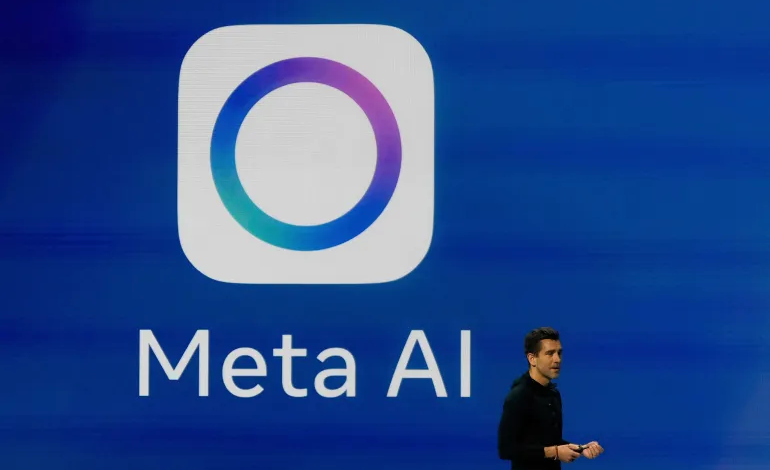
In what economic circles have described as a “historic bet,” Meta, the parent company of Facebook and Instagram, has announced capital expenditure plans for 2026 ranging between $115 billion and $135 billion.
The figure was revealed by CEO Mark Zuckerberg during the company’s annual earnings report last Tuesday. The planned spending represents an increase of nearly 87% compared to 2025’s $72 billion outlay, positioning Meta as the holder of the largest private-sector technology infrastructure budget in history.


This aggressive move signals a major strategic shift. While the company previously focused heavily on virtual reality, it is now prioritizing what it calls “personal superintelligence.” The massive investment will be directed toward several key areas:
- Building fifth-generation data centers specifically designed to support large language models (LLMs), which require immense computing power and advanced cooling systems.
- Expanding its semiconductor strategy by purchasing hundreds of thousands of graphics processing units (GPUs) from Nvidia, while continuing development of its in-house MTIA chip.
- Securing long-term energy supply chains through strategic partnerships focused on clean and nuclear energy to power these large-scale facilities.
Market Confidence Despite Massive Spending
Contrary to expectations that such a sharp increase in spending might rattle investors, the announcement was met with optimism. Shares rose by 10% on Wall Street following the news.
Investor confidence was largely driven by Meta’s strong financial performance in 2025, with annual revenues reaching $201 billion. Growth was fueled by improvements in AI-powered advertising algorithms, reassuring markets that the substantial capital expenditures are likely to translate into tangible long-term returns.
A Budget Larger Than Some National Economies
To put the scale into perspective, the upper end of Meta’s projected budget—$135 billion—exceeds the gross domestic product of countries such as Kuwait and Morocco. It also comfortably surpasses planned spending by major competitors like Microsoft and Amazon in the same sector.
With this decision, Meta places itself at the forefront of the digital arms race, betting decisively that artificial intelligence is not merely an added feature—but the new backbone of global economic growth in the coming decade.