China plans to allow foreign investors to trade domestic nickel and lithium futures contracts, as part of broader efforts to expand its influence in global commodity markets, according to a report published by Bloomberg.
The China Securities Regulatory Commission announced on Friday that nickel and lithium carbonate are among 14 futures and options products that will be opened to overseas investors. The regulator urged exchanges to prepare for the changes, without specifying a timetable for the start of trading.
China is the world’s largest importer of raw materials, yet global benchmark prices are still largely set in major financial centers such as London, Singapore, and New York. Beijing aims to strengthen its pricing power through this move, which also aligns with its broader strategy to enhance the yuan’s appeal as an international currency.
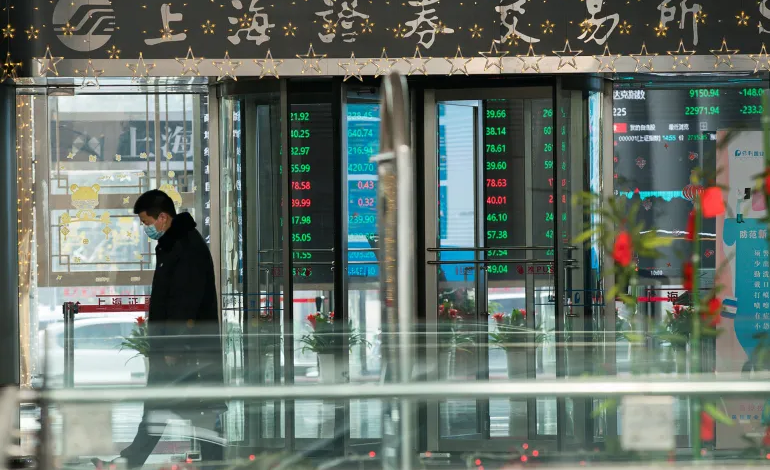
Nickel futures are traded on the Shanghai Futures Exchange, while lithium carbonate futures are listed on the Guangzhou Futures Exchange. Both contracts are among the most actively traded domestic commodities and carry significant global importance due to their central role in battery manufacturing and the global transition toward clean and renewable energy.
Bloomberg quoted Tiger Shi, managing partner at Bands Financial Ltd, describing the decision as an “important step,” and suggesting that other metals such as copper, aluminum, and zinc could eventually be opened to foreign investors as part of the Shanghai Futures Exchange’s push toward greater internationalization.
In May last year, the Shanghai Futures Exchange unveiled an internationalization plan that included proposals to allow foreign investors to use foreign currencies as collateral for yuan-denominated trades. Restrictions on cross-border capital flows have long been cited as a key reason China has struggled to play a larger role in global commodity markets.
In a statement on Friday, the Shanghai Futures Exchange said opening futures trading to foreign investors would help strengthen China’s commodity pricing capabilities, improve risk management for non-ferrous metals, and enhance price discovery, particularly for nickel.
However, previous efforts to open China’s commodity futures markets have had limited impact. The Shanghai International Energy Exchange, an affiliate of the Shanghai Futures Exchange, has allowed foreign investors to trade yuan-denominated copper futures since 2020 and crude oil futures since 2018, but neither has significantly challenged the dominance of international exchanges, according to Bloomberg.
By contrast, the Dalian Commodity Exchange’s decision to open iron ore futures to foreign investors in 2018 achieved relatively greater success, offering a more positive precedent for China’s latest initiative.