Security experts and strategic analysts have outlined the key parameters shaping Egypt’s stance on the escalating crisis in Sudan, emphasizing that Cairo has drawn clear red lines. These include preserving Sudan’s territorial integrity, rejecting any attempts to partition the country or establish parallel entities, safeguarding state institutions—particularly the national army—and preventing state collapse that could threaten Egypt’s national security, especially its water security, or trigger massive refugee flows and the spread of terrorism and organized crime.
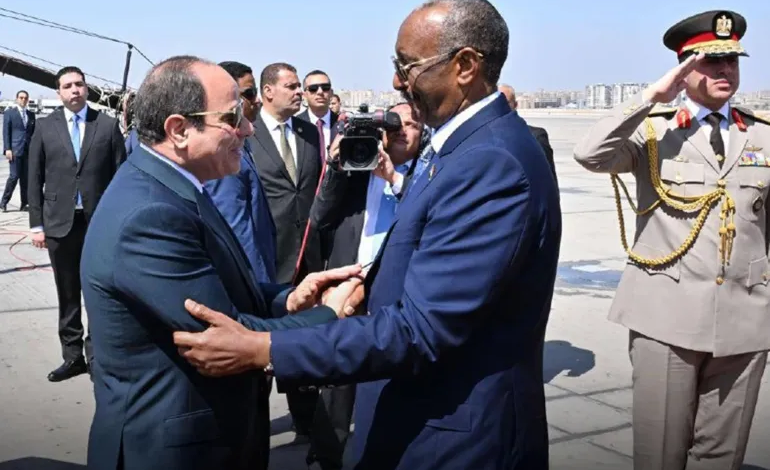
These assessments follow recent statements by Egyptian Foreign Minister Badr Abdelatty, who stressed that Egypt has explicit red lines regarding Sudan and warned that crossing them would prompt a decisive and firm response. He firmly rejected any scenario involving Sudan’s division or the equation of the Sudanese Armed Forces with what he described as illegitimate militias, calling for the withdrawal of mercenaries, the cessation of militia support, and an end to the flow of weapons into Sudan.

According to analysts, Egypt’s message is directed at multiple actors. Chief among them are the Rapid Support Forces (RSF) and their regional and international backers—whether through financial, military, or logistical support—as well as states facilitating the transit of mercenaries and arms. The statements also signal Cairo’s concerns and conditions to international stakeholders engaged in Sudan’s crisis.
The conflict in Sudan erupted on April 15, 2023, following clashes between the Sudanese Armed Forces and the RSF over disputes related to the integration of the latter into the regular army. Fighting initially broke out in the capital, Khartoum, before spreading to several regions across the country. After significant territorial shifts and severe humanitarian consequences, the Sudanese army announced in March 2025 that it had regained control of Khartoum and key sovereign institutions, though the broader crisis remains unresolved.
Core Elements of Egypt’s Red Lines
Experts, including Major General Mohamed Abdel Wahed, Major General Samir Farag, and political analyst Amr Hashem Rabie, identify several pillars underpinning Egypt’s red lines:
First, preserving Sudan’s unity and territorial integrity, and firmly rejecting any attempts to establish breakaway entities—particularly in Darfur—given the direct implications for Egyptian national security.
Second, protecting Sudanese state institutions from collapse, especially the national army, which Egypt views as the backbone of state cohesion and stability. The disintegration of national armed forces, they argue, often leads to widespread chaos.
Third, refusing any political framework that equates the Sudanese army with the RSF or other armed militias, and rejecting the notion of parallel authorities within a single state.
Fourth, countering foreign interventions and preventing the formation of alliances aimed at reshaping Sudan in line with regional or international agendas, while insisting on the withdrawal of mercenaries and halting military support to militias.
Fifth, safeguarding Egypt’s water security by preventing any developments that could affect the flow of the Blue Nile, particularly amid reports of attempts to control strategic areas near the Ethiopian border.
Sixth, averting a humanitarian and security catastrophe that could result in large-scale refugee movements into Egypt, as well as the proliferation of extremist groups and transnational criminal networks.
From Cautious Mediation to Preventive Deterrence
Analysts note a gradual shift in Egypt’s posture—from a cautious mediator to a more assertive actor issuing direct warnings—driven by battlefield developments that risk entrenching de facto divisions along lines of natural resources and regional influence.
Major General Mohamed Abdel Wahed observes that Egypt’s official rhetoric has intensified in recent months, particularly amid military developments in Darfur, Kordofan, and the Blue Nile region. These shifts, he argues, carry broader geopolitical implications that could reshape regional power dynamics in ways detrimental to Egypt’s strategic interests.
He describes Cairo’s current approach as a strategy of preventive deterrence aimed at averting a full-scale collapse of the Sudanese state. At the same time, he underscores the importance of coordination with influential regional and international actors to manage the evolving balance of power within Sudan.
Targeted Audiences of Egypt’s Message
Egypt’s warnings are directed at a broad spectrum of stakeholders. Beyond directly addressing the RSF, they send indirect signals to the group’s supporters, including those providing financial backing, arms supplies, or logistical corridors.
The statements also serve as a political message to international actors involved in Sudan’s crisis, clarifying Egypt’s security concerns and reaffirming its support for Sudan’s recognized government and national army. Analysts characterize the message as preventive and deterrent rather than a declaration of war.
Response Options: Diplomacy, Military Tools, and Economic Leverage
Experts emphasize that Egypt’s potential responses span diplomatic, military, and economic tracks, grounded in international law and existing defense agreements.
Diplomatically, Cairo is expected to engage institutions such as the African Union, the United Nations, and the League of Arab States, while maintaining communication with key regional and international stakeholders.
On the military front, options range from enhanced logistical, training, and arms support to the Sudanese government to more direct measures should red lines be crossed. Analysts suggest that modern warfare tools, particularly unmanned aerial systems, could play a central role in any escalatory scenario.
However, several experts caution against the risks of direct intervention, warning that it could trigger broader regional alignments, escalate tensions with neighboring states, and lead to prolonged attrition.
As Sudan’s war approaches its third year, the humanitarian toll continues to mount, with millions displaced and widespread food insecurity and disease outbreaks. Increasingly, the conflict appears driven not only by political rivalry but also by competition over strategic resources—from gold in Darfur to oil in Kordofan and control over water corridors in the Blue Nile—reflecting a complex interplay of domestic, regional, and international interests.