From Estrangement to Strategic Recalibration: How the Trump Administration Reshaped U.S. Ties with Pakistan and India

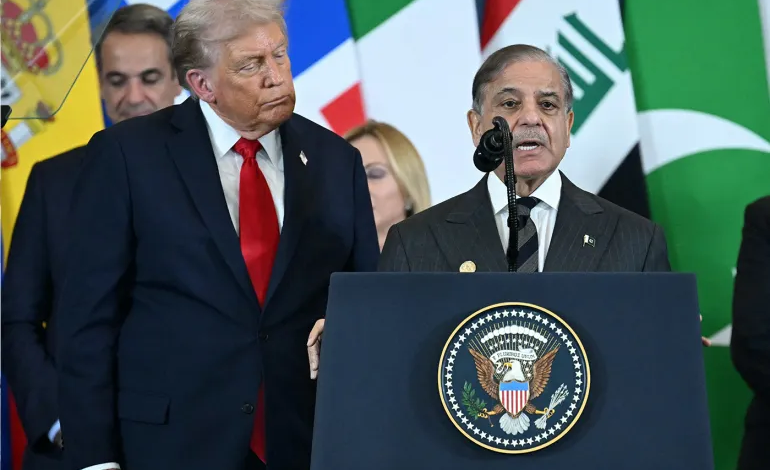
U.S. relations with Pakistan and India have undergone a notable recalibration during the first year of President Donald Trump’s second term, defying earlier assumptions that New Delhi would remain Washington’s uncontested strategic partner in South Asia. Instead, Islamabad has re-emerged as a significant beneficiary of shifting American priorities.
A Historically Uneasy Relationship with Pakistan
The Trump administration’s past approach toward Pakistan was marked by skepticism. During his first term, President Trump suspended security assistance, accusing Islamabad of failing to act decisively against militant networks. Diplomatic engagements were often tense, reflecting deep mistrust within segments of the U.S. policy establishment.

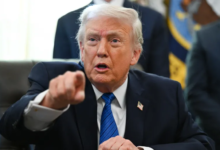
At the outset of Trump’s second term in early 2025, signals suggested little immediate change. Indian Prime Minister Narendra Modi was among the first foreign leaders welcomed at the White House, reinforcing expectations of continued strategic alignment between Washington and New Delhi.
A Sudden Shift in Momentum
The trajectory shifted in March 2025, when U.S. authorities announced the capture of a senior ISIS-K operative allegedly involved in the 2021 Kabul airport attack, in an operation facilitated by Pakistan. The development provided a platform for renewed security cooperation and allowed Washington to publicly acknowledge Islamabad’s counterterrorism role.
Subsequent diplomatic gestures underscored the warming ties. A high-level Pakistani military official received an unprecedented White House invitation, signaling political goodwill. In parallel, the United States reduced tariffs on certain Pakistani exports and initiated discussions on collaboration in critical minerals and energy sectors—areas increasingly central to U.S. strategic planning.
Mounting Frictions with India
Conversely, U.S.-India relations encountered turbulence. Washington imposed elevated tariffs on select Indian goods, citing trade imbalances and concerns linked to India’s continued purchases of Russian oil. Public criticism of India’s economic policies further complicated the bilateral dynamic.
Although both sides later announced a new trade understanding aimed at easing tensions and lowering duties, details remain limited, and analysts question the durability of the arrangement amid broader geopolitical and economic disagreements.
Structural Drivers Behind the Realignment
The evolving U.S. posture reflects deeper strategic recalibrations. The administration has adopted a more transactional approach to global partnerships, prioritizing supply chain security—particularly in rare earths and critical minerals—where Pakistan’s geographic and logistical positioning carries growing relevance.
At the same time, India’s ongoing border tensions with China and its complex regional security environment constrain its capacity to project power more assertively in the Indo-Pacific maritime theater—an arena central to U.S. strategic competition with Beijing.
Pakistan, meanwhile, has intensified engagement efforts in Washington, leveraging diplomatic and lobbying channels to reframe its strategic value. India, by contrast, has relied more heavily on the institutional depth of its longstanding partnership with the United States.
An Uncertain Strategic Balance
Despite recent trade normalization efforts, the once-celebrated U.S.-India strategic convergence faces a period of recalibration. Meanwhile, the renewed U.S.-Pakistan engagement remains contingent on broader regional dynamics, including Islamabad’s ties with Beijing and evolving counterterrorism cooperation.
What is increasingly clear is that South Asia has re-emerged as a focal point of U.S. strategic adjustment. Traditional alignments are being reassessed through the lens of economic leverage, security pragmatism, and geopolitical competition—reshaping Washington’s approach to both Islamabad and New Delhi.