The Supreme Court of the United States ruled Friday that President Donald Trump violated federal law by unilaterally imposing broad tariffs on numerous countries, delivering a significant legal and political blow to his administration.
In a 6–3 decision, the Court found that Trump’s expansion of the International Emergency Economic Powers Act to justify sweeping, open-ended tariffs exceeded the authority granted by Congress. Notably, Justices Neil Gorsuch and Amy Coney Barrett—both nominated by Trump during his first term—joined the majority.


Writing for the Court, Chief Justice John Roberts stated that the president exercised “extraordinary authority to impose tariffs unlimited in duration and scope” and emphasized that such power requires clear congressional authorization. Roberts was appointed by former President George W. Bush.
Justice Gorsuch wrote that whatever Congress intended in the economic emergency statute, it did not clearly grant the president the sweeping tariff authority he sought to use. Justice Barrett added that the most reasonable reading of the law does not empower presidents to impose tariffs in this manner.
Sharp Reaction from Trump
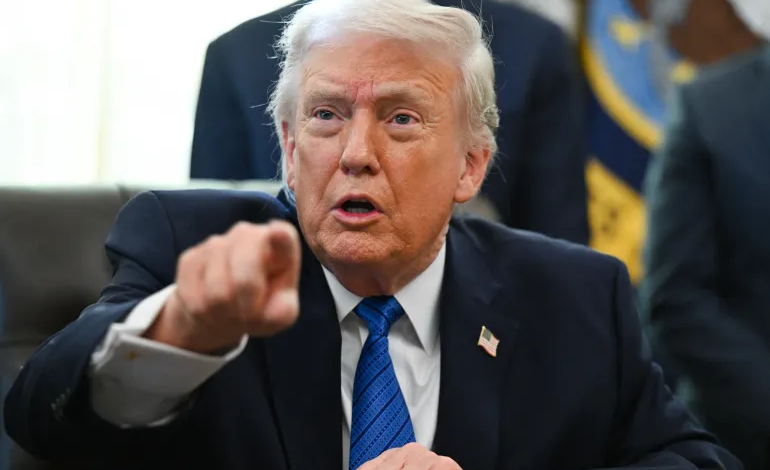
Speaking at the White House, Trump described the ruling as “very disappointing” and said he was “ashamed” of certain members of the Court, criticizing what he characterized as a lack of courage.
Peter Hoef, a Republican commentator writing for Newsweek, argued that the ruling undermines claims that Trump-appointed justices are loyal to him personally, saying the decision demonstrates that judicial independence remains intact.
Saul Anuzis, former chair of the Michigan Republican Party, similarly noted that it is a mistake to assume judges will vote in favor of the president who appointed them, stressing that the U.S. system is designed to maximize judicial independence.
A Landmark Economic Case
The case represents one of the most significant economic disputes to reach the Supreme Court in years. It challenged tariffs Trump imposed on what he called “Liberation Day” on April 2, along with duties targeting imports from China, Mexico, and Canada.
According to U.S. Customs and Border Protection data, the federal government collected $134 billion in revenue from the contested tariffs through mid-December, involving more than 301,000 importers across multiple sectors.
Justice Gorsuch expressed concern that allowing a president to impose sweeping tariffs unilaterally would amount to Congress relinquishing its constitutional responsibility over foreign commerce.
Political and Legal Implications
Jeremy Mayer, a political science professor at George Mason University, described the decision as a “major setback” for Trump’s administration. He warned that any attempt by the president to defy the Court would mark a serious constitutional crisis—something not seen in over a century.
Despite the ruling, Trump quickly announced new tariffs at a 10% rate, signaling that his administration may seek alternative legal pathways to pursue its trade agenda.
Bruce Fein, a former associate deputy attorney general, said the ruling curbs exaggerated claims of limitless executive authority and predicted continued legal clashes in related policy areas.
Meanwhile, Hoef suggested that Justice Brett Kavanaugh’s dissent could serve as a roadmap for how the administration might legally restructure its approach in future cases—indicating that the tariff battle may not be over.