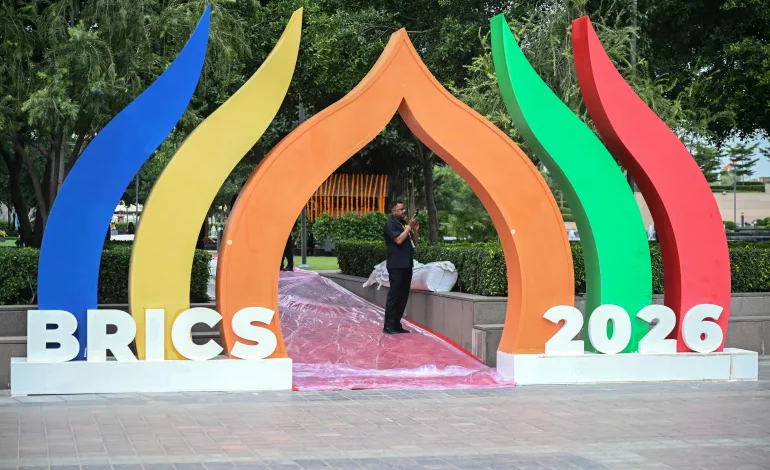
India is pushing an initiative at the BRICS summit in New Delhi to link central bank digital currencies (CBDCs) issued by member states, with the aim of making cross-border payments and trade faster, cheaper and more efficient.
According to sources familiar with the discussions cited by Reuters, New Delhi wants the proposal to be included on the agenda of the two-day summit. The initiative builds on a commitment made at the 2025 BRICS summit in Rio de Janeiro to improve interoperability between payment systems across member countries.


Technical and Political Obstacles
Despite the potential benefits, the proposed system faces several challenges. Reuters noted that the limited global adoption of central bank digital currencies, together with political and technical obstacles, could make implementation more difficult.
The proposal forms part of broader BRICS efforts to improve cross-border payments and increase the use of local currencies in trade and investment, reducing reliance on major international currencies.
Reserve Bank of India Governor Sanjay Malhotra said in August that BRICS countries were discussing the possibility of connecting fast-payment systems with central bank digital currencies. He noted that reducing the cost of cross-border transactions was an area of common interest among the group’s members.
At a meeting of BRICS finance ministers and central bank governors, officials called for greater interoperability between payment systems to enable cross-border transactions that are fast, secure and inexpensive.
They also backed reforms to international financial institutions, including the International Monetary Fund and the World Bank, calling for greater representation, transparency and accountability that better reflects the growing weight of emerging economies.
Connecting Local Payment Systems
BRICS countries are also examining ways to connect their domestic instant-payment networks across borders.
Among the systems being discussed are India’s Unified Payments Interface (UPI) and Brazil’s Pix, which together processed more than $10 trillion in transactions over the previous 18 months, according to the Financial Times.
Expanding such systems internationally could make it easier to conduct transactions directly in local currencies. However, differences in currency regulations, capital controls and trade imbalances could complicate efforts to establish a unified cross-border framework.
The discussions therefore extend beyond digital currencies to broader efforts aimed at building an interconnected payment infrastructure among BRICS economies.
Is BRICS Seeking to Reduce Reliance on the Dollar?
The Indian proposal does not involve creating a common BRICS currency or replacing the US dollar as the world’s main reserve currency.
Instead, the initiative is primarily designed to make international payments between member states faster and more efficient. Connecting different digital currencies would also require mechanisms for exchanging currencies and addressing trade imbalances between participating economies.
BRICS currently comprises 11 members: Brazil, Russia, India, China, South Africa, Egypt, Ethiopia, Indonesia, Iran, Saudi Arabia and the United Arab Emirates.
The group’s expanded membership has increased its economic weight, while also making financial and monetary coordination more complicated because of differences in the members’ economies, financial systems and trade interests.
Greater Use of Local Currencies
Alongside efforts to modernize payment systems, BRICS members are exploring ways to expand the use of local currencies in trade and investment.
The bloc is also discussing broader financial cooperation and new mechanisms for cross-border payments as global trade faces increased volatility and higher energy costs.
For the participating economies, these initiatives could help lower transaction costs and improve the efficiency of international payments while providing additional tools for conducting trade and investment amid changes in the global economic environment.