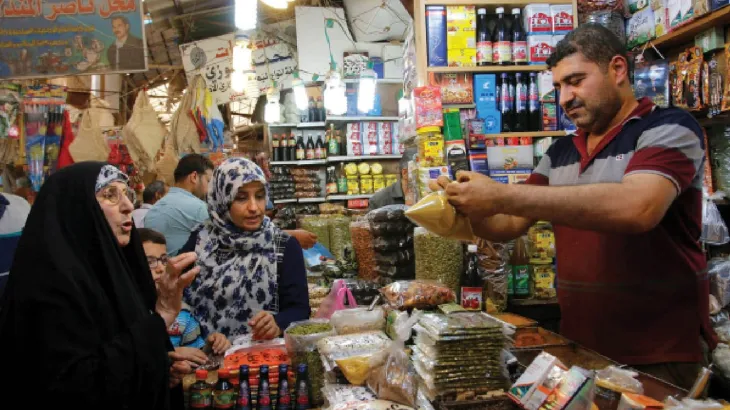
A field tour conducted by Al Jazeera Mubasher across several Iraqi markets found a noticeable increase in the prices of goods and products, amid growing complaints from traders, business owners and consumers about declining purchasing power and weaker sales activity.
Market participants attributed the price increases to several overlapping factors, including higher transportation costs, increased taxes on some imported goods and disruptions to global supply chains.


In the mobile phone and electronics sector, a shop owner said prices had risen as a result of several factors occurring simultaneously, most notably the impact of the war and the closure of the Strait of Hormuz, which he said had pushed transportation costs up by around 30%.
He added that new taxes on imported electrical and electronic products, coupled with higher prices for components imported from China and Thailand, including processors and memory chips, had directly affected retail prices in Iraqi markets.
Some mobile phones that previously sold for around 100,000 Iraqi dinars, equivalent to approximately $76, are now being offered for between 160,000 and 180,000 dinars, or roughly $122 to $137.
The shop owner said the sharp increase had significantly reduced consumer demand, with lower-income households bearing the greatest burden amid what he described as unstable pricing mechanisms in the market.
Higher Production Costs Hit Bakeries
The pressure has also extended to bakeries, which are facing rising operating and production costs.
One bakery owner told Al Jazeera Mubasher that higher flour prices, reduced fuel supplies and rising gas costs had significantly increased the cost of producing bread.
He said bakery owners had been forced to reduce the amount of bread sold for 1,000 dinars from six loaves to five, while also making the loaves smaller, in an effort to keep their businesses operating amid rising production expenses.
Bread remains a staple food for Iraqi households, but declining purchasing power and occasional delays in salary payments have added to the difficulties facing families.
The bakery owner added that weaker demand had also affected the sector’s activity, with workloads falling and some workers no longer receiving regular assignments.
Families Cut Back on Purchases
Several consumers interviewed during the tour expressed frustration over the continued rise in the prices of essential goods, saying their ability to purchase food had declined significantly.
One shopper said many families could no longer afford to buy dates and meat in the quantities they had previously purchased. He also criticized the quality of some food products included in the government food ration program.
The complaints highlight the growing pressure on Iraqi households, many of which have been forced to prioritize essential spending while reducing purchases of products that were once part of their normal consumption.
Businesses Face the Threat of Closure
In a food market, one trader said rising prices, combined with declining cash availability among consumers, had directly affected commercial activity.
He explained that a number of shops had been forced to close because their owners could no longer afford rental costs amid falling revenues.
The trader said prices for several goods had risen sharply, while sales had dropped to less than 30% of their previous levels.
According to him, consumers have become increasingly cautious about spending, limiting their purchases to essential needs while many prefer to hold on to whatever money they have in case economic conditions deteriorate further.
The developments indicate that higher transportation, import and production costs are affecting not only retail prices, but also market activity, household purchasing power and the ability of businesses to remain operational, as large segments of Iraqi society face growing pressure to meet their daily needs.