Berlin Electronics Show Showcases Borderless Phones, Solar-Powered Laptops and Other Future Tech

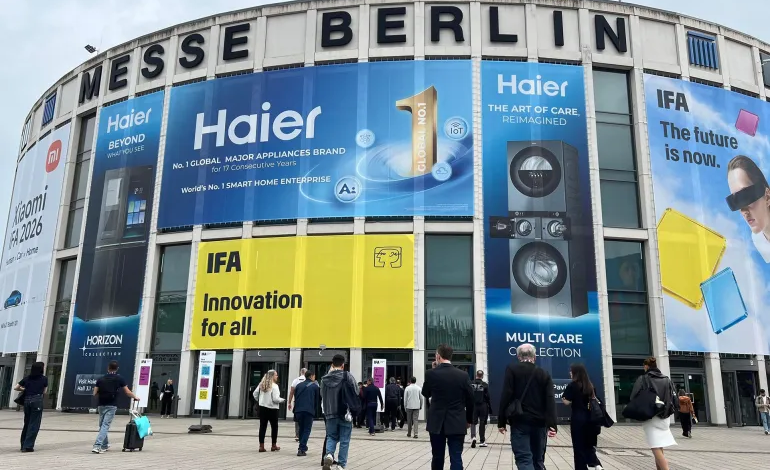
Berlin’s latest consumer electronics show has wrapped up in Germany after several days of unveiling innovative products and futuristic technology concepts that offer a glimpse into what major tech companies are developing for the coming years.
While many of the products showcased are not yet available for purchase, they highlight emerging ideas and technologies that could eventually make their way into consumer markets.

Here are some of the most notable innovations presented at the event.
Tecno’s Completely Borderless Smartphone
Chinese smartphone maker Tecno showcased a futuristic concept phone featuring a 6.78-inch display with virtually no visible bezels, creating a distinctive edge-to-edge design.
The device combines its futuristic appearance with flagship-level specifications, including an OLED display with a 144Hz refresh rate, a high-end MediaTek processor, 8GB of RAM, and 256GB of internal storage.
It is also equipped with a 6,000mAh battery, giving the concept impressive endurance alongside its premium hardware.
Tecno has not yet announced when the phone will officially go on sale, but the concept demonstrates how smartphone manufacturers are continuing to push toward displays with increasingly minimal borders.
RugOne Smartphone With a Detachable Camera
RugOne introduced a rugged smartphone designed for adventure and demanding outdoor use, featuring a particularly unusual camera system.
The phone allows users to completely detach its rear camera module and use it separately as an independent action camera, providing greater flexibility for recording outdoor activities and adventures.
The smartphone also features three additional rear lenses, including a 64-megapixel night-vision camera equipped with infrared sensors.
Other specifications include a large 9,300mAh battery and a 6.67-inch AMOLED display with a 120Hz refresh rate.
The detachable camera can record video at up to 2.7K resolution for as long as 40 minutes and has 64GB of internal storage, allowing it to operate independently from the smartphone.
Affordable Laptops Take Aim at the MacBook Neo
Apple’s launch of the relatively affordable MacBook Neo has encouraged rival laptop manufacturers to explore the same market, particularly among students and younger consumers.
At the Berlin show, companies including Lenovo, Dell and Acer presented a range of affordable laptops featuring distinctive colors and designs aimed at younger users.
The devices share a common focus on everyday productivity and education while maintaining lower prices than premium laptops.
Their specifications are primarily designed to meet the needs of students and other users who require a capable computer for browsing, studying, office work and other everyday tasks without paying for high-end hardware.
Lexar Unveils a 1mm-Thick SSD
Storage company Lexar showcased an ultra-thin portable solid-state drive designed to provide large storage capacity in an exceptionally compact form.
The new Lexar Muse SSD offers up to 1TB of storage and supports high-speed data transfers, while its thickness measures just 1mm, making it comparable in size to a small bank card.
The drive uses a proprietary magnetic connection, meaning users need to keep its dedicated cable. It also comes with a magnetic case that allows it to be attached to compatible smartphones.
The design is aimed at users who need additional storage while maintaining maximum portability and avoiding the bulk associated with conventional external drives.
Anker Sleep Earbuds With a Built-In Display
Anker introduced the latest generation of its Soundcore Sleep earbuds, adding an unusual feature to the charging case: an integrated display.
The screen provides information and statistics related to sleep tracking and allows users to control certain earbud functions directly from the case without opening their smartphone or the companion app.
The earbuds use active noise cancellation to create a quieter environment for sleeping, while their design is intended to remain comfortable when worn for extended periods.
They also feature dedicated sensors for collecting biometric data associated with sleep monitoring, turning the charging case into an important part of the overall sleep-tracking experience.
A Laptop That Charges Using Solar Power
Chinese manufacturer Oukitel showcased a rugged laptop designed for use in challenging environments, with the ability to recharge using solar energy.
A solar panel integrated into the back of the device can generate around 10 watts of power. Under suitable conditions, it can recharge the laptop to approximately 50% of its capacity in about six hours.
The device is particularly suited to users working in remote locations or areas where access to conventional electricity is limited or unreliable.
The laptop is expected to launch in November with 14th-generation Intel processors, 16GB of RAM and 512GB of storage.
TCL Smartphone With an E-Ink Display Mode
TCL presented the latest generation of its NextPaper P80 Ultra smartphone, which combines conventional smartphone capabilities with an electronic-paper display experience.
Users can switch the display mode with a single press, transforming the interface into one optimized for e-paper while retaining the functionality of Android 16.
The device features a large 6.83-inch display with a refresh rate of up to 120Hz, combining flagship smartphone specifications with an alternative display experience designed to make reading and extended use more comfortable.
Acer’s Gaming Handheld That Doubles as a Mini PC
Acer unveiled a new Windows-based handheld concept that combines the capabilities of a portable gaming device with those of a compact desktop computer.
At first glance, the device resembles a conventional handheld gaming console, but it can be transformed into a small workstation under a concept project called Project DualPlay.
The design reflects a growing trend toward multifunctional devices that can serve different purposes, allowing users to switch between gaming and everyday productivity without needing separate hardware.
Together, these products highlight a broader direction in consumer technology: manufacturers are increasingly developing devices that are more flexible, compact and closely aligned with everyday user needs, while experimenting with technologies such as solar power, electronic paper and detachable components to create new experiences.