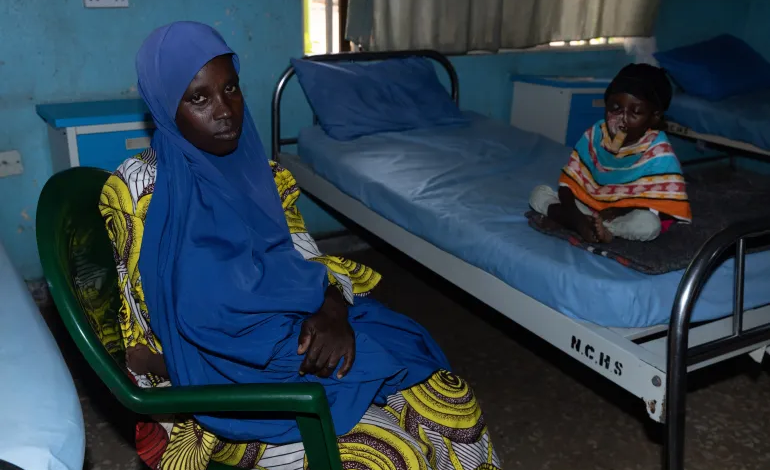
Ibrahim Dalhatu was just three years old when he developed noma, a severe and rapidly progressing infection that attacks the mouth and face and can be fatal or leave survivors with devastating facial injuries.
Now 8 years old, Ibrahim has undergone six surgeries since 2021 at a specialized children’s hospital in Sokoto, northern Nigeria, in an effort to repair the damage caused by the disease.

An Infection That Can Destroy Facial Tissue
Noma primarily affects children between the ages of 2 and 6, particularly those living in conditions of extreme poverty, malnutrition, inadequate sanitation, and limited access to healthcare.
The infection typically begins with inflammation of the gums before rapidly spreading to the soft tissues and bones around the mouth and face. In severe cases, the disease can destroy large portions of the face within a short period.
Early treatment can include antibiotics, wound care, and nutritional support. However, when the disease is detected late, reconstructive surgery may become necessary to repair the extensive damage.
Doctors Without Borders provides free, multi-stage reconstructive surgeries for affected children. Ibrahim’s father said he had initially been worried about the cost of treatment, but was relieved after learning that the procedures would be provided free of charge.
A Disease Closely Linked to Extreme Poverty
Experts identify extreme poverty and severe malnutrition as two of the main risk factors associated with noma.
The World Health Organization describes noma as an indicator of extreme poverty, while United Nations bodies have highlighted the harsh conditions that allow the disease to spread among some of the world’s most vulnerable children.
In 2023, WHO Director-General Tedros Adhanom Ghebreyesus said noma was more than a disease, describing it as a social indicator of extreme poverty and malnutrition that disproportionately affects the most vulnerable populations.
In northern Nigeria, where armed violence and economic hardship have placed additional pressure on communities, doctors and health officials say more children are being diagnosed with the disease.
Many patients reach medical facilities only after the disease has advanced significantly, partly because of limited awareness and difficulties accessing healthcare. Delayed treatment increases the likelihood of extensive tissue loss and the need for complex reconstructive surgery.
Bukola Oluyede, the medical coordinator for Doctors Without Borders in Nigeria, said medical teams were seeing more advanced cases and were working to increase community awareness and encourage families to seek treatment earlier.
Early intervention can prevent extensive tissue destruction and reduce the likelihood that children will require major reconstructive procedures later in life.
An Overlooked Disease With Outdated Data
The World Health Organization classified noma as a neglected tropical disease in December 2023, placing it among illnesses that have historically received limited international attention and funding.
The classification followed an initiative led by Nigeria’s Ministry of Health in January of that year, backed by 31 countries.
The fight against noma is also complicated by a lack of up-to-date data. WHO has not updated its global estimates for the disease since 1998, when it estimated that approximately 140,000 cases occurred annually, with a mortality rate of up to 90%.
A study published in The Lancet Global Health in July, however, identified more than 50,000 cases across 12 northern Nigerian states between 1999 and 2024, based on records from the Sokoto hospital.
The area known as the “noma belt” stretches across parts of Africa, from Senegal and Mauritania in the west to Ethiopia in the east, where poverty, malnutrition, and limited access to healthcare create conditions in which the disease can spread.
Funding Cuts Threaten Efforts to Combat the Disease
The challenges extend beyond the lack of reliable data to include insufficient funding for neglected tropical diseases.
Health organizations have reported that official development assistance directed toward neglected tropical diseases fell by 41% between 2018 and 2023. The decline has begun affecting medicine distribution campaigns and delaying field surveys designed to identify cases.
Nigeria has only two specialized hospitals treating noma patients, one in Sokoto and another in the capital, Abuja, which was built in 2023.
Yuka Makino, a technical officer for oral health at the World Health Organization’s African office, said Nigeria’s relatively high number of reported cases may partly reflect the presence of specialized hospitals, the country’s large population, and government-led efforts that allow more cases to be detected than in many other countries.
Early detection remains critical to limiting the impact of noma. Prompt treatment, improved nutrition, and proper medical care can stop the disease before it reaches stages requiring complex reconstructive surgery.