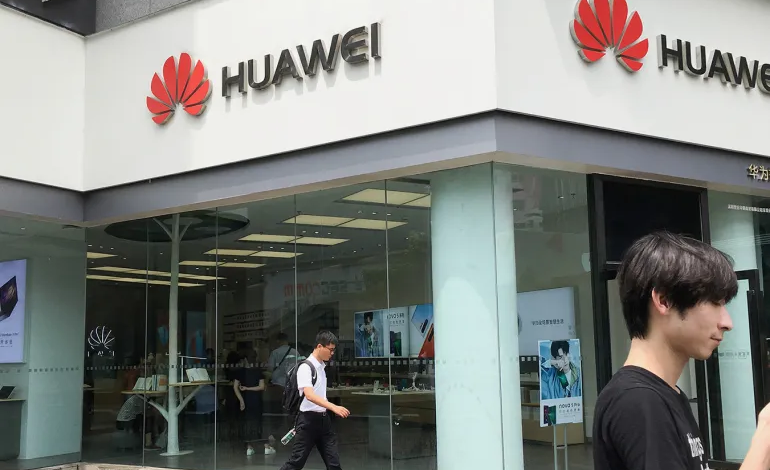
Huawei has unveiled its first smartphone designed for international markets to support 5G networks since the United States imposed trade restrictions on the company in 2019, marking a significant step in its efforts to regain a foothold in the global smartphone market.
The new device belongs to the Huawei Pura 90 series, which was launched in China earlier this year before the company introduced its international version at an event in Kuala Lumpur, Malaysia.


The launch marks Huawei’s long-awaited return to 5G connectivity in smartphones aimed at overseas markets, following years in which most of its global devices were limited to 4G networks as a result of U.S. restrictions.
5G Returns to Huawei’s Global Smartphones
After Huawei was placed on the U.S. trade restriction list in 2019, the company lost access to a range of advanced technologies and components, including certain chipsets and Google’s services. The restrictions had a direct impact on Huawei’s products targeting international consumers.
While Huawei managed to reintroduce 5G-enabled smartphones in China in recent years, most of its international devices continued to rely on 4G connectivity.
Recent developments, however, indicate that this situation is changing. Tests suggested that the global version of the Huawei Pura 90 Pro Max was capable of connecting to 5G networks.
Tests conducted on the device in markets outside China reportedly recorded download speeds exceeding 1.1 gigabits per second, providing a strong indication that 5G technology has returned to Huawei’s international smartphones.
How Did Huawei Overcome the Restrictions?
Analysts link Huawei’s return to 5G with the progress the company has made in developing its own technologies after years of investment in semiconductor design, telecommunications components and efforts to reduce its dependence on foreign suppliers.
Since launching the Mate 60 series in China in 2023, Huawei has increasingly relied on locally developed Kirin processors produced in cooperation with Chinese companies. This allowed the company to offer 5G-compatible smartphones in its domestic market.
The latest move represents an attempt to extend those capabilities to international markets, a significantly more complicated task than simply installing a 5G-capable chip.
A smartphone designed for global markets must support multiple frequency bands that vary from one country to another. It must also pass testing requirements imposed by local telecom operators and support technologies such as VoLTE, VoNR and carrier aggregation.
These requirements pose an additional challenge for Huawei, particularly amid restrictions on its access to certain foreign technologies and components.
Tough Competition in Global Markets
Despite the importance of 5G support, Huawei still faces major obstacles as it seeks to rebuild its position in the international smartphone market.
The absence of official Google services remains one of the company’s biggest challenges, particularly for users outside China who rely on services such as Google Play, Google Maps, Gmail and other components of the Android ecosystem.
Huawei has instead developed its own ecosystem for international markets, including the AppGallery app store and EMUI interface, while the company uses HarmonyOS in China.
As a result, the success of the new smartphone will depend not only on its hardware and 5G capabilities, but also on Huawei’s ability to convince consumers outside China to adopt its software ecosystem in a market dominated by major manufacturers such as Apple, Samsung and Xiaomi.
Huawei Continues to Bet on Photography
Alongside 5G connectivity, Huawei continues to emphasize photography as one of the key competitive features of its flagship smartphones.
The Pura 90 Pro Max features a 50-megapixel main camera with a variable aperture, along with a 200-megapixel telephoto camera and advanced image-processing technologies.
The smartphone also features an OLED display with a refresh rate of up to 120Hz, as well as a large battery and support for fast charging technologies.
Through these specifications, Huawei is attempting to combine modern connectivity with advanced photography capabilities in an effort to attract consumers in highly competitive smartphone markets.
Could Huawei Return to the Global Smartphone Race?
The launch reflects Huawei’s continued investment in developing its domestic technology ecosystem and reducing its dependence on foreign suppliers.
The company is seeking to increase its global smartphone shipments this year, benefiting from improvements in its ability to develop processors and greater stability in China’s supply chains.
Reports suggest that Huawei is targeting roughly a 20% increase in smartphone shipments compared with the previous year, at a time when some competitors are facing challenges related to rising component costs and shortages of certain types of memory.
Nevertheless, Huawei’s path toward restoring its global presence remains complicated. U.S. restrictions are still in place, while several Western countries continue to impose restrictions on the use of Huawei technology in telecommunications infrastructure.
The return of 5G to Huawei’s global smartphones therefore represents an important milestone for the company, but it will not by itself guarantee a return to its previous level of competitiveness. The success of the move will ultimately depend on Huawei’s ability to combine advanced hardware, high-speed connectivity and a software ecosystem capable of competing with the alternatives available to consumers around the world.