The Washington Post has revealed new European diplomatic efforts aimed at reviving negotiations between the United States and Iran, as the economic consequences of the closure of the Strait of Hormuz continue to grow and the administration of US President Donald Trump faces increasingly limited options in dealing with the crisis.
According to the newspaper, Washington has expanded its diplomatic contacts to include Austria and Greece, seeking to use their relations with Tehran and their potential influence to ease Iran’s position after traditional mediation efforts stalled.

Rubio Opens Channels With Austria and Greece
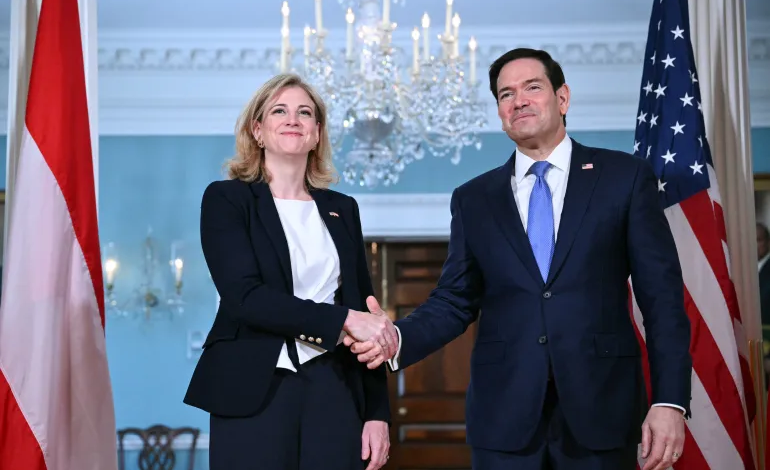
The past week has witnessed a series of diplomatic contacts related to the Iran issue. US Secretary of State Marco Rubio met Austrian Foreign Minister Beate Meinl-Reisinger in Washington on Tuesday, before holding a phone call on Wednesday with Greek Foreign Minister George Gerapetritis.
Following those discussions, the Austrian and Greek foreign ministers each held separate phone calls with Iranian Foreign Minister Abbas Araghchi on Thursday.
Although the US State Department denied directly coordinating the calls, a European diplomat told the Washington Post that the timing of the contacts was not coincidental.
The State Department said it could not comment on the timing of diplomatic communications conducted by other countries, stressing that Rubio had not asked either minister to contact Iran or deliver messages to Araghchi.
Nevertheless, the department acknowledged that the Iran issue was discussed during Rubio’s talks with both ministers, as the Trump administration faces growing pressure over the continued conflict with Iran without a decisive outcome.
Why Austria and Greece?
Analysts believe the involvement of Austria and Greece reflects an effort to expand European mediation channels and accelerate attempts to end the conflict, particularly as the economic consequences of the Strait of Hormuz closure continue to spread beyond the Middle East.
Although neither country initially appears to be among the most prominent actors capable of resolving the US-Iran dispute, each has specific factors that could make it useful at this stage.
Vienna and the Nuclear Issue
Austria holds particular importance because its capital, Vienna, hosts the headquarters of the International Atomic Energy Agency, which is expected to play a central role in any future agreement concerning Iran’s nuclear program.
Vienna has also historically been an important venue for negotiations between Iran and international powers, including talks that eventually led to the 2015 nuclear agreement.
This gives Austria a potentially useful diplomatic channel if negotiations return to issues involving Iran’s nuclear activities, international inspections and guarantees sought by the various parties.
Athens Focuses on Maritime Security
Greece, meanwhile, has a different strategic importance linked to its geographical position and extensive interests in the shipping industry. It is one of the Mediterranean’s major maritime powers and has significant commercial interests in shipping routes through both the Strait of Hormuz and the Red Sea.
During his call with his Iranian counterpart, the Greek foreign minister emphasized the importance of ensuring freedom of navigation and maritime security amid the direct impact of the Strait of Hormuz closure on international trade and energy markets.
Athens therefore has a direct interest in reducing tensions and reopening maritime routes to shipping, particularly as the prolonged crisis increases transportation and insurance costs and adds pressure to global energy markets.
US-Iran Deadline Draws Near
The new European diplomatic efforts come as the deadline established under a memorandum of understanding signed by the United States and Iran in June approaches.
The agreement is officially set to expire on August 17, increasing the urgency of diplomatic efforts to achieve a breakthrough in negotiations.
Failure to reach an understanding before the deadline could further complicate the crisis and increase the risks associated with continued confrontation.
Economic and Political Pressure on Trump
Analysts say Trump’s room for maneuver has become increasingly limited as the economic costs of the war mount and the closure of the Strait of Hormuz continues to affect global markets.
The pressure is not limited to economic concerns. Declining strategic stockpiles of certain key weapons are also seen as an additional challenge for the US administration, particularly with the November midterm congressional elections approaching.
Washington therefore faces a difficult balancing act: maintaining pressure on Iran and pursuing its strategic objectives while containing the military and economic costs of the conflict.
This growing pressure may explain why the United States and its European partners are expanding their diplomatic contacts and exploring new channels that could help revive negotiations with Tehran.